- Pièce chorégraphique
- Publication
- 02.07.2026
The Montpellier dance festival, with new directors for the first time in more than 40 years, featured the wildly popular (La)Horde.
The Opera Berlioz Corum “has 2,000 seats and we sold out in a week,” said Hervieu, the former director of the Biennale de Lyon, who presented (La)Horde in that city in 2018. “That rarely happens.”
At the first performance of « Après moi, le déluge » the (La)Horde phenomenon was on full display, the audience skewing young, the atmosphere excited.

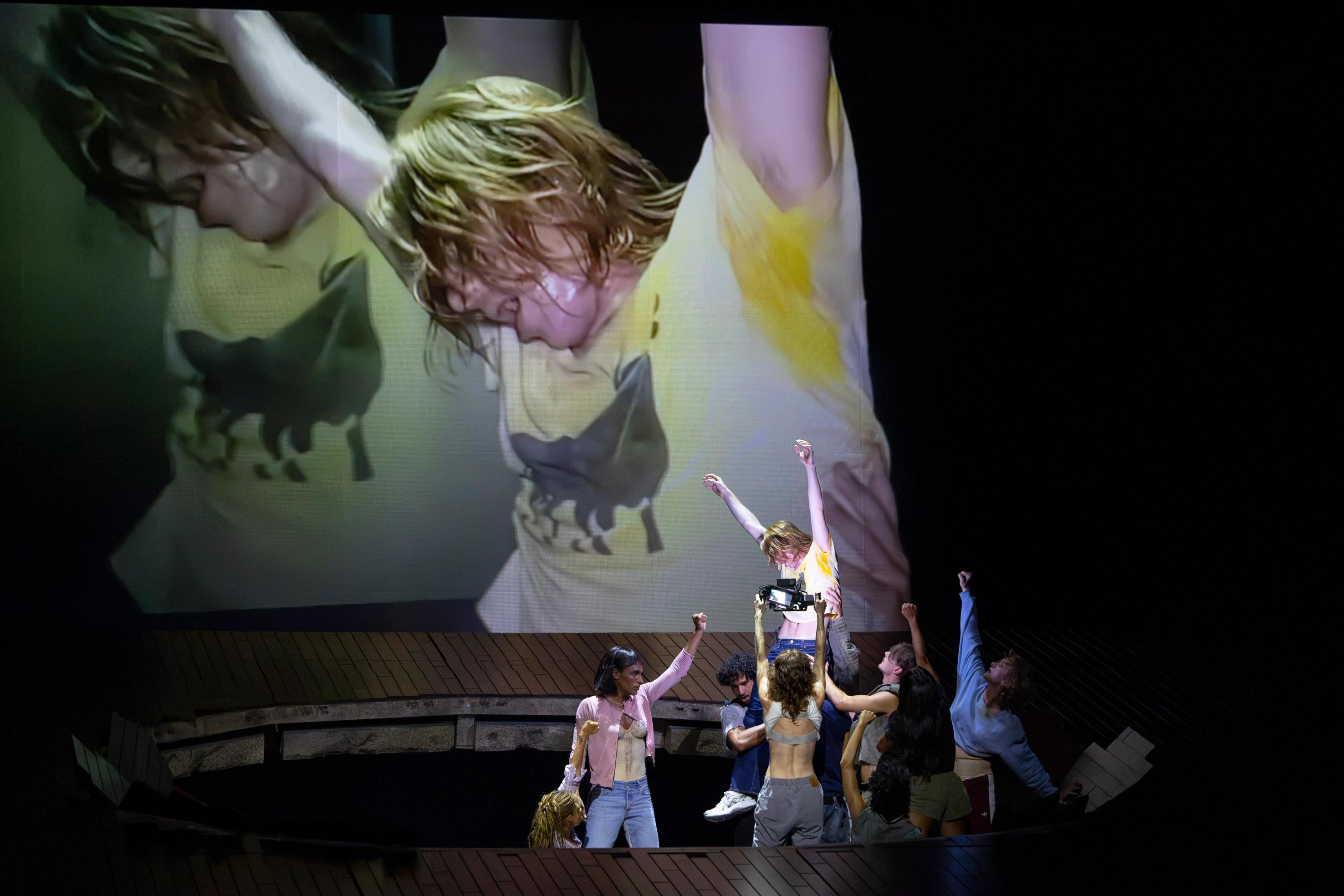
“Après moi” begins with the sound of applause, as 12 dancers facing away from us and seen hazily through a gauze curtain, bow repeatedly to an audience seen onscreen. Philip Glass-like music (by Pierre Aviat) begins, perhaps a nod to the final section of (La)Horde’s previous piece, “Age of Content.”
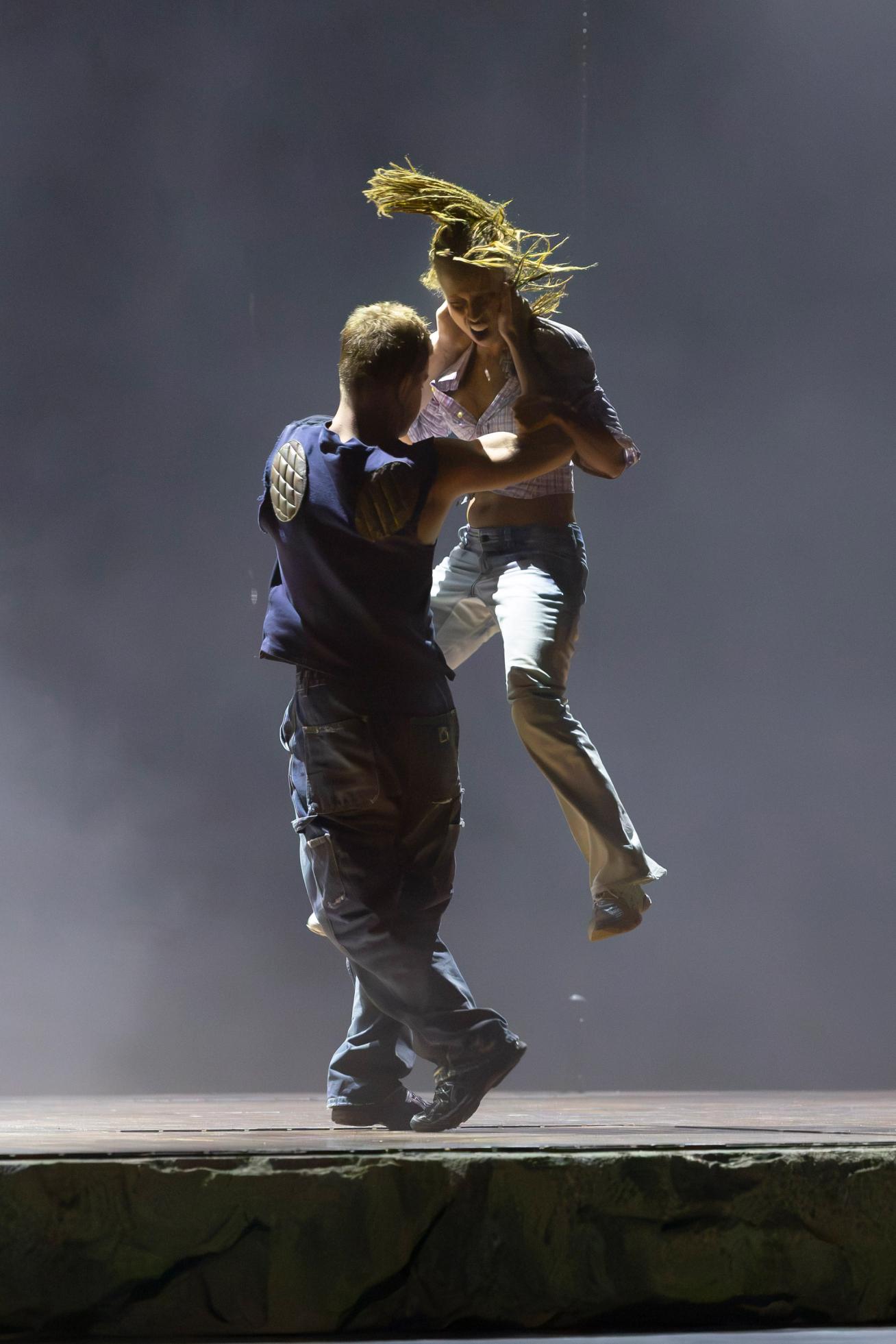
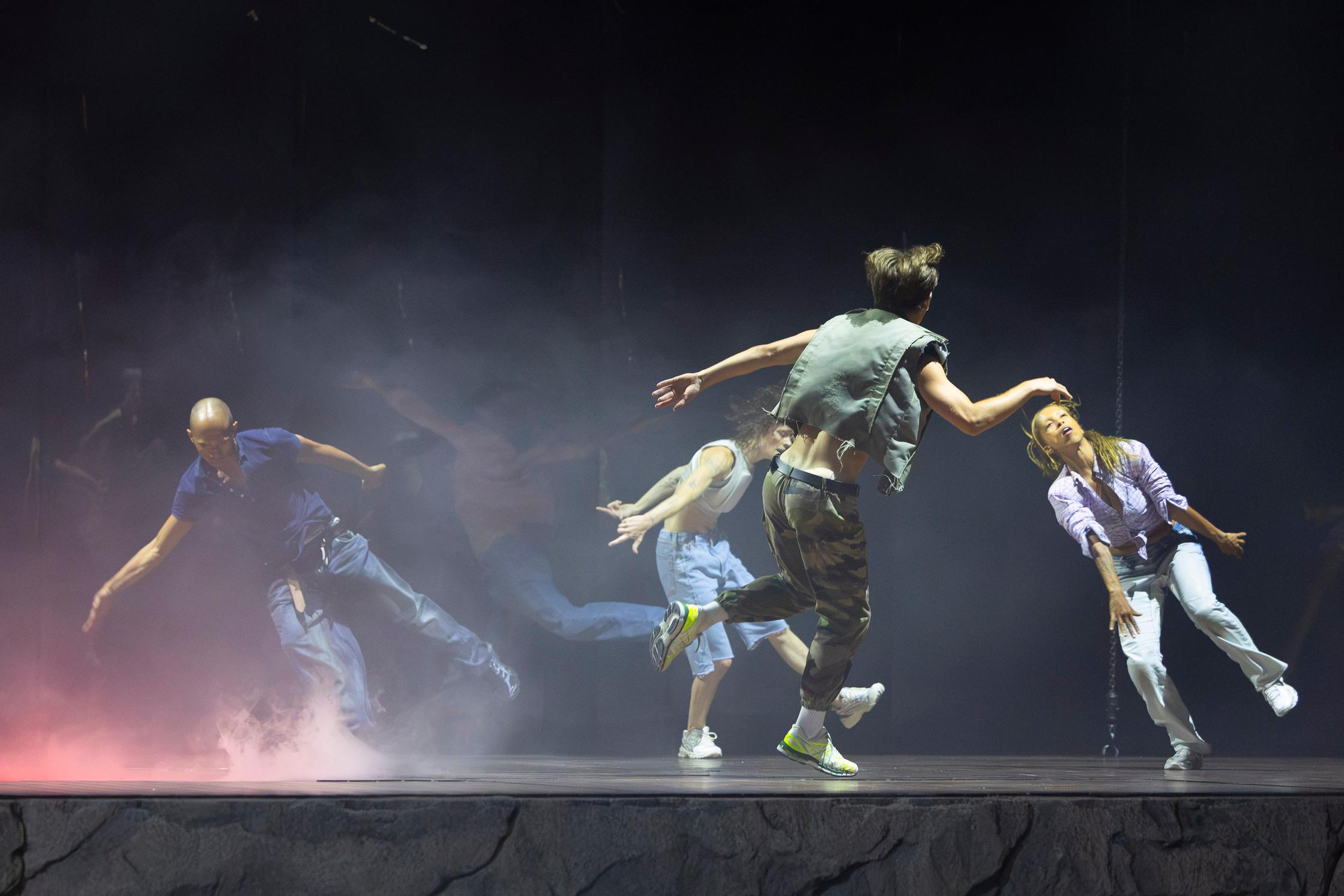
There are further allusions to that work when the dancers, dressed in jeans, shorts and T-shirts, begin to dance full out with stamping side to side steps to pounding music, their lines splintering into smaller groupings, occasionally punctuated by stuttering stoppages.

La)Horde evokes the tribalism of the group. The dancers are at once ritual participants and ravers, treading the thin line between joy and rage, celebration and rebellion as they splinter and regroup in a tight huddle, arms thrusting into the air, the music pumping, adrenaline high.
Then the stage tilts up, revealing a large crevice in the center, into which the dancers disappear, emerging and receding in human pyramids, their manically grinning faces filmed and seen onscreen automatons confronting the apocalypse.

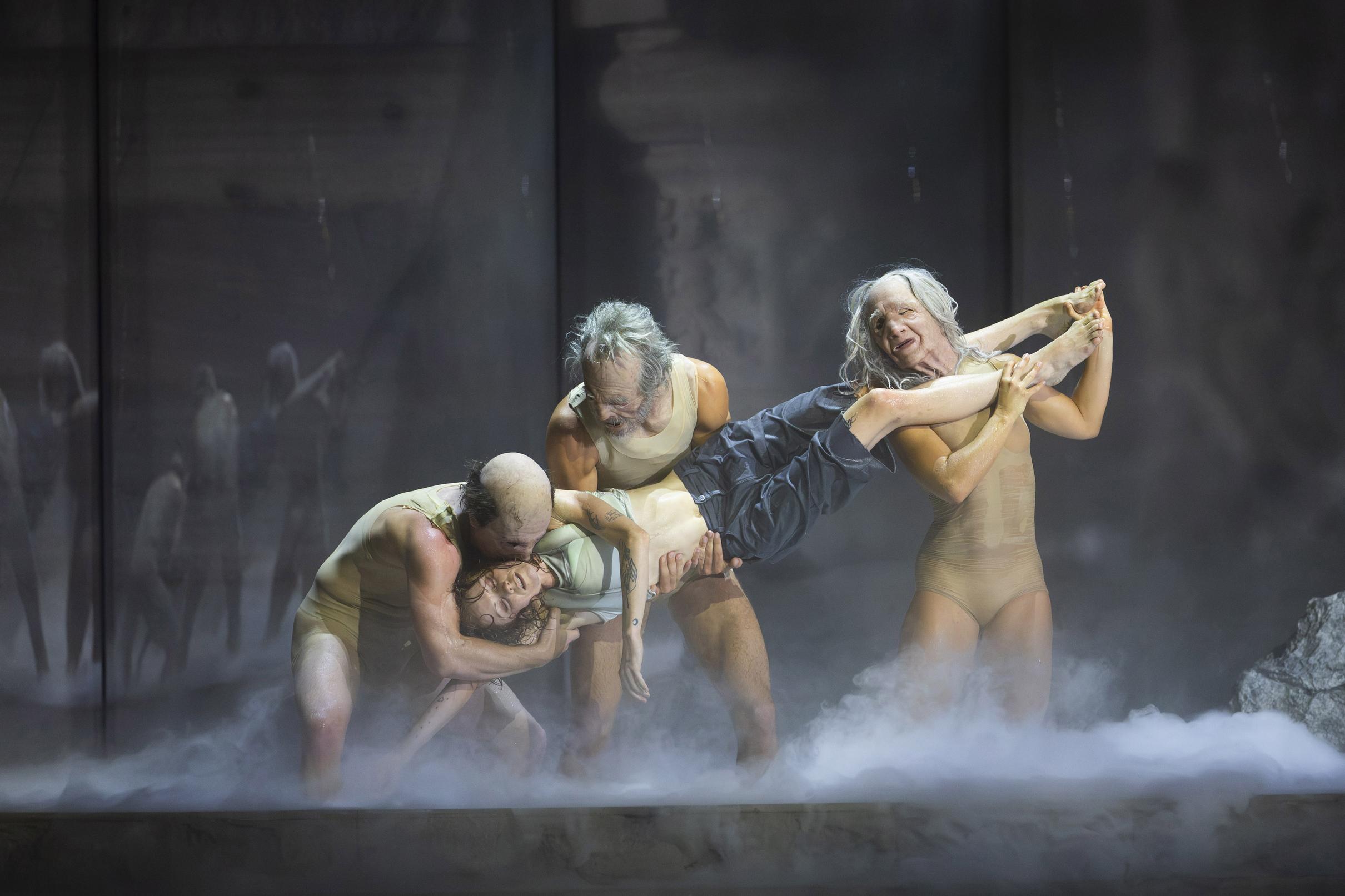
In a second section, three figures, apparently old and naked, sit in a large pool, steam rising. A body, hair covering its face, is pulled out of the water, draped over the side, pulled up, lifted and dropped. Two priestly figures in white robes and knee-length hair enter, turning and manipulating the body while tossing their heads and arcing their legs in perfect unison. The walls glow red, the music goes organ heavy; the atmosphere is Japanese horror movie.

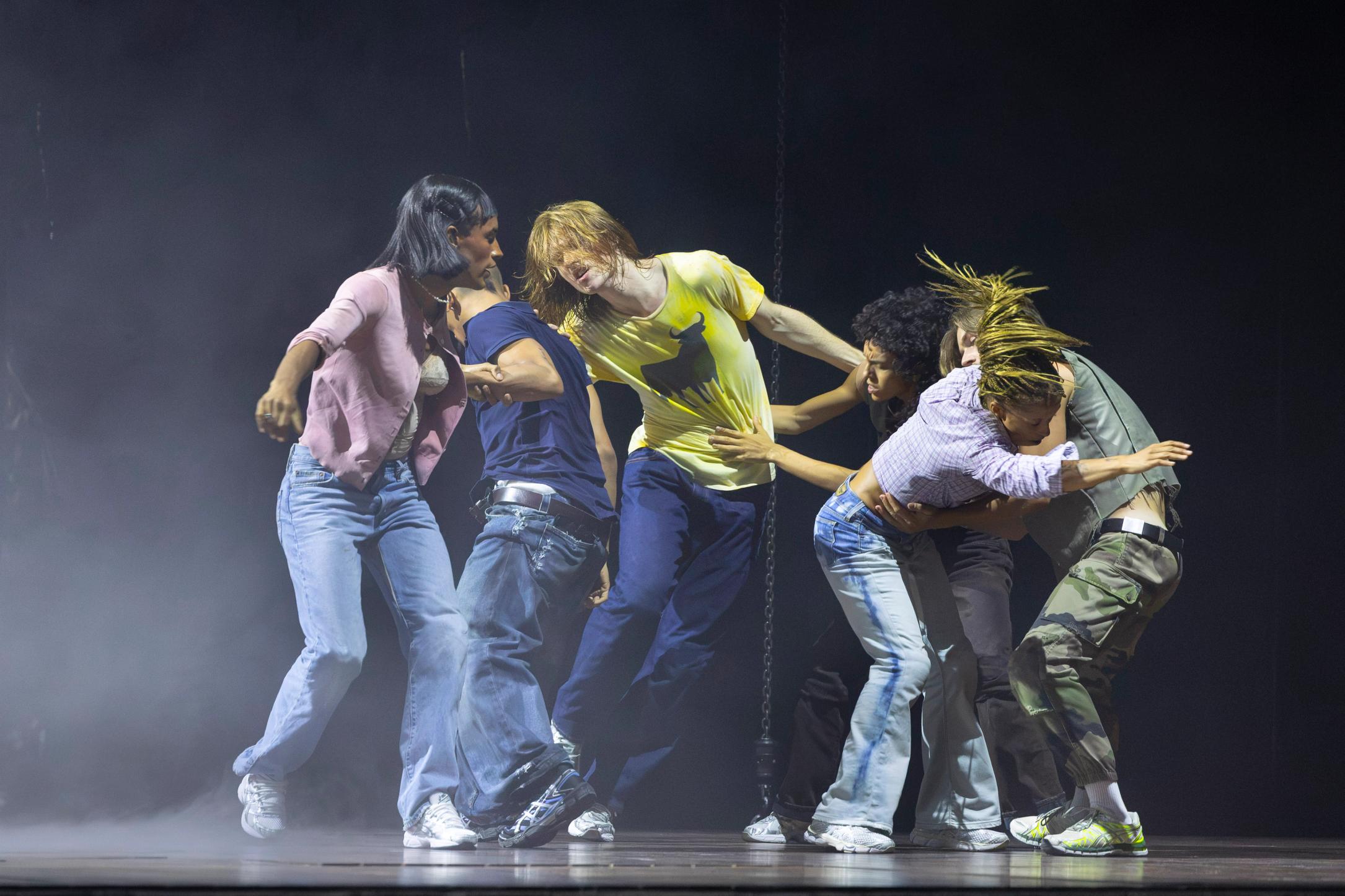
The body eventually returns to life, dancing manically to an adaptation of “Chop Suey!” by System of a Down (“Wake up (wake up)/Grab a brush and put a little makeup”); the tilted stage descends and the dancers return. The vocabulary of the final section, like the first, is a mix of street, club and viral dances. It’s not particularly sophisticated.
But (La)Horde’s use of space is masterly as the dancers through multiplying and dissolving formations with a simple steps occasionally inflected with new rhythmic detail. It evokes Lucinda Childs’s riveting minimalism while also suggesting a rock concert, a protest march, a dance at the end of the world.

In a final tableau, strange hybrid creatures with elephant legs and tails appear an effect of climate change? Perhaps it is the end of the world. Or possibly it’s an allusion to Gus Van Sant’s “Elephant,” one of many film references that permeate the work.
« Après moi, le déluge » is puzzling and fascinating I’m still thinking about the probably overlong “Japanese” scene but also straightforwardly entertaining. Contemporary dance of this scale and theatricality is vanishingly rare, and the combination of commercial appeal and experimental ambition admirable. It’s a terrific debut for a new era at Montpellier Dance.
Link to the article here