From 14 to 18 October, the Ballet national de Marseille hosted a residency for CHAOSTUR, a project by the Permadanse company. On stage, the work brings together a quartet of performers: Juliette Larochette and Nina Venard (music), alongside Maria Cargnelli and Gwendoline Leclerc (dance). A residency showing is scheduled for 18 October at 4:00 p.m.
“What place does work occupy within our bodies? What postures do our bodies adopt when we work? What masks are we expected to wear? Ultimately, who are we when we work?”

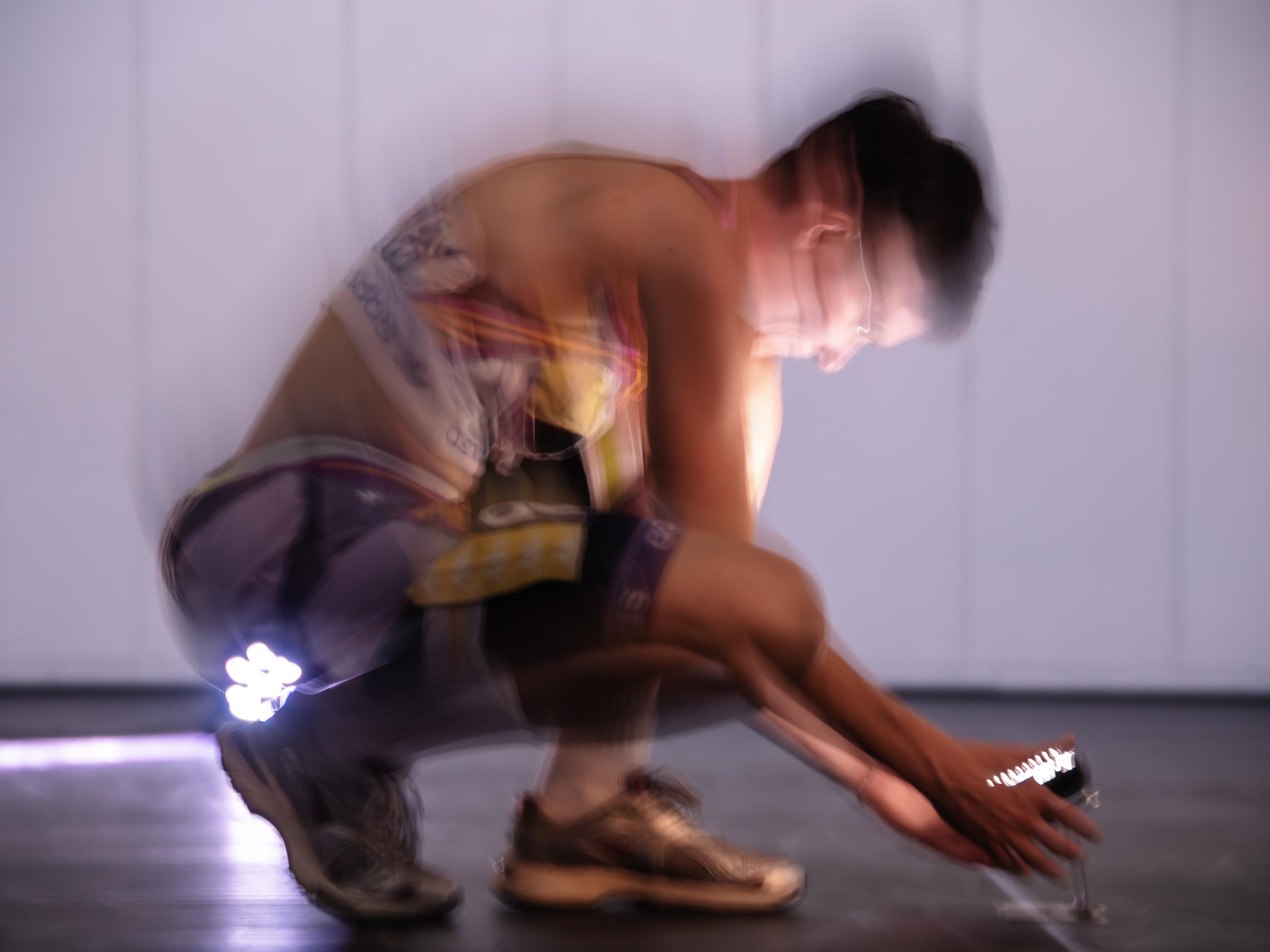
A hybrid company working across both musical creation and performance, Permadanse has developed ongoing collaborations with choreographers who share an affinity for techno music, rave culture, and the world of clubs.
“On a human and aesthetic level, this is the identity we identify with. We came to realize that club culture had reached a mainstream stage, where the consumerist aspect of nightlife had begun to dominate. Faced with growing individualism, we felt that a sense of communion was being lost. Permadanse was born from the desire to bring people together again: when you introduce performance into a club, people stop, watch, and observe. A space of attention and connection with others emerges, creating a sense of cohesion…”
With CHAOSTUR, Permadanse turns to the stage for the first time. Yet the work delivers the same diagnosis: there is an urgent need to free ourselves from the postures imposed by alienated labour and from the malleability of bodies subjected to repetitive gestures and the physical constraints of everyday work. These include “the frantic movements of a hand on a computer mouse, the race against delivery deadlines, micro-movements, the injunction to perform, or even the smiling imperative of well-being…”
The result is a stage work that examines the standardization of bodies, explores the repetitive nature of movement, and questions our social identities.
“It features characters who embody contemporary society: office workers, gig-economy delivery drivers, digital influencers figures that have become emblematic of a world where work claims to be digitalized, optimized, and flexible… yet beneath these promises lie new forms of bodily alienation.”

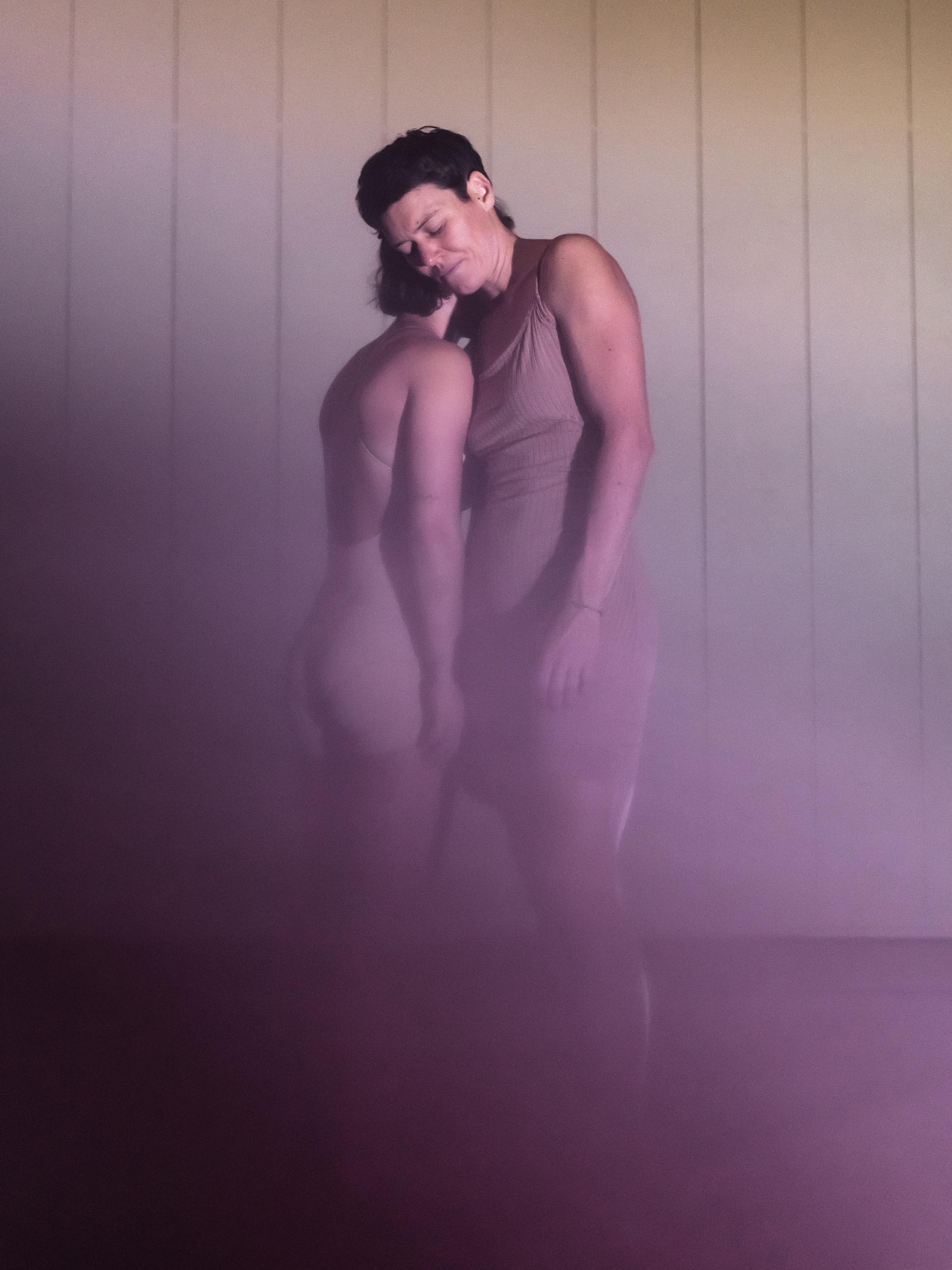
In keeping with this embodied reflection on the notion of posture, Maria Cargnelli conceived a choreographic language that deliberately resists fixed forms:
“With this work, the aim is to foreground the idea of ‘body states’ rather than to write a restrictive choreographic score. We wanted to work more with the body's emotional dimension. That inevitably means leaving ample room for improvised movement, where a form of freedom can emerge a freedom that is simply not accessible in any other way.”
Musically, CHAOSTUR’s original score shifts between soundscapes, voices, and concrete sounds. Rhythm through its relationship to the living body occupies a central place: is it a force of constraint or one of liberation?
“Sampled sounds and voices issue commands such as ‘take a break’ and ‘go to work’ explicit or implicit imperatives that punctuate the working day. We also wanted the music to evoke an urban landscape: metallic, abrasive, almost industrial, creating a rather stressful atmosphere. Then, little by little, the soundscape accelerates until it transforms into the rhythm of a celebration, a moment of release…”
“Chaos is not merely something negative, because within chaos lies the possibility of upheaval. And that upheaval is so profound that it brings us back to what truly matters.”