- Accueil Studio
- 23.06.2026
With the solo Clameurs, Syrian-born choreographer Mithkal Alzghair continues his questioning of Western societies. Here, he portrays the male figure as the central presence in a fractured world.

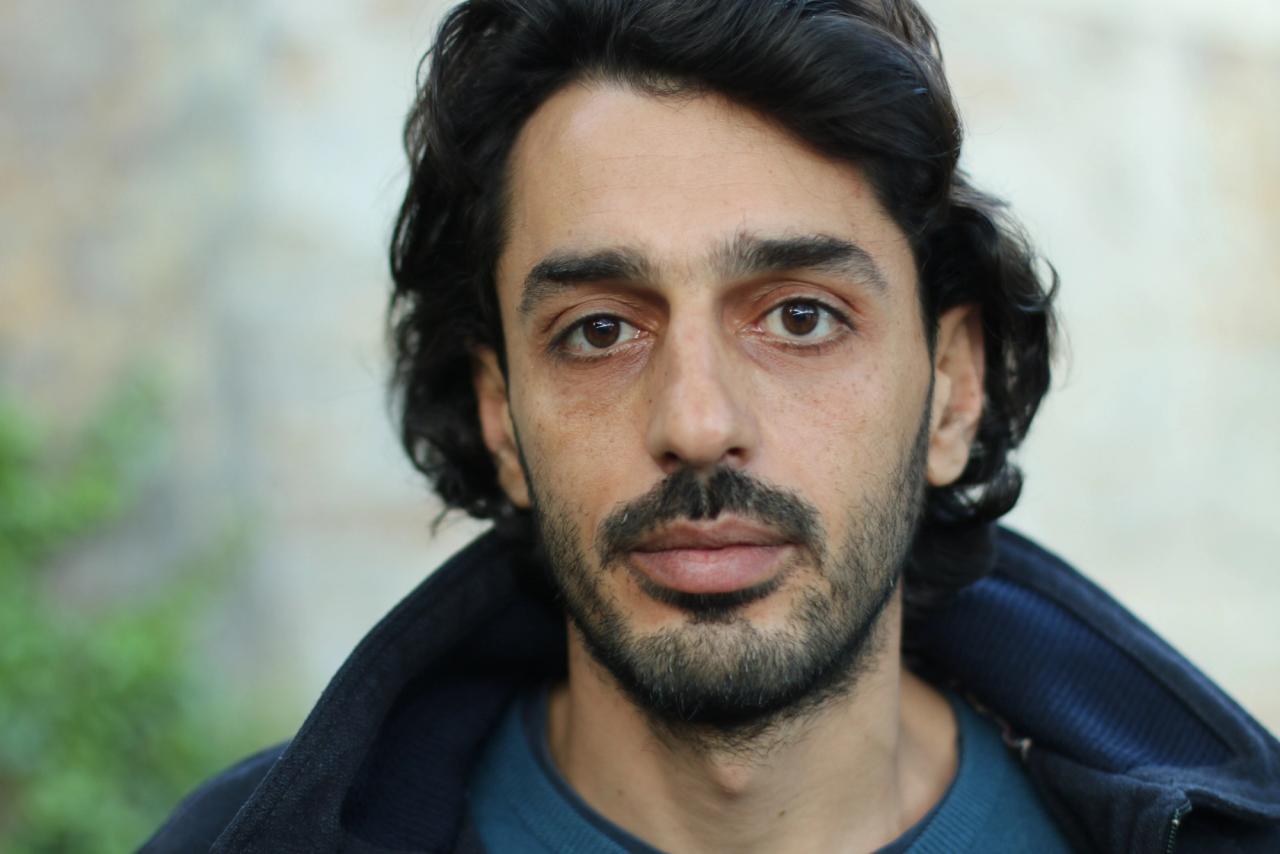
“What the world is going through today, and the future we seem to be moving toward, lead me to reflect on the forms of domestication at play and the ways they transform the body.”
Every form of domination and control power and the laws it enforces,imposes constraints upon the body. How do these forces shape what bodies experience? How can one resist prohibitions, limitations, and borders? In Clameurs, Mithkal Alzghair explores the ways in which the body responds when confronted with imposed constraints. This inquiry gives rise to a double portrait: that of a subdued and silent man, but also of one in revolt, driven by a need to “cry out” and break through barriers.

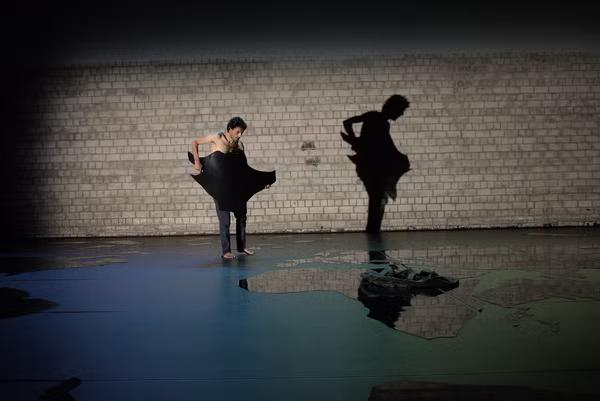
More specifically, the choreographer focuses on the threshold between one reality and another, and on the ways the body inhabits these transformations. Suspended between past and future, reality and fiction, Clameurs explores a liminal space where time itself seems to stand still.
Set to the sounds of the oud, a traditionally identified Eastern instrument, Mithkal Alzghair plays with rhythm and movement in perpetual transformation. He explores both what stimulates and what constrains him, mirroring the tensions inherent to the human condition: freedom and restriction, violence and humanity. He subjects the body to forces such as pressure, compression, and weight in search of spaces of freedom and lightness. Through repetition, he reaches a state of emotional and physical trance, unfolding on a fragmented, mirror-like stage.
“At one point, I bring the fragments together, and they become a map of the world, an image of the world we inhabit, and of our desire to recreate it without borders or divisions, to imagine a reality in which humanity and the world are conceived as a whole.”
Yet beyond its apparent critique, Mithkal Alzghair remains driven by what he calls “a desire to live in a utopia of freedom and equality.” Clameurs thus becomes a way of imagining an end to this fragile, fragmented world. Existing in a perpetual state of in-betweenness, the work offers both a portrait of humanity today and a vision of the humanity yet to come.