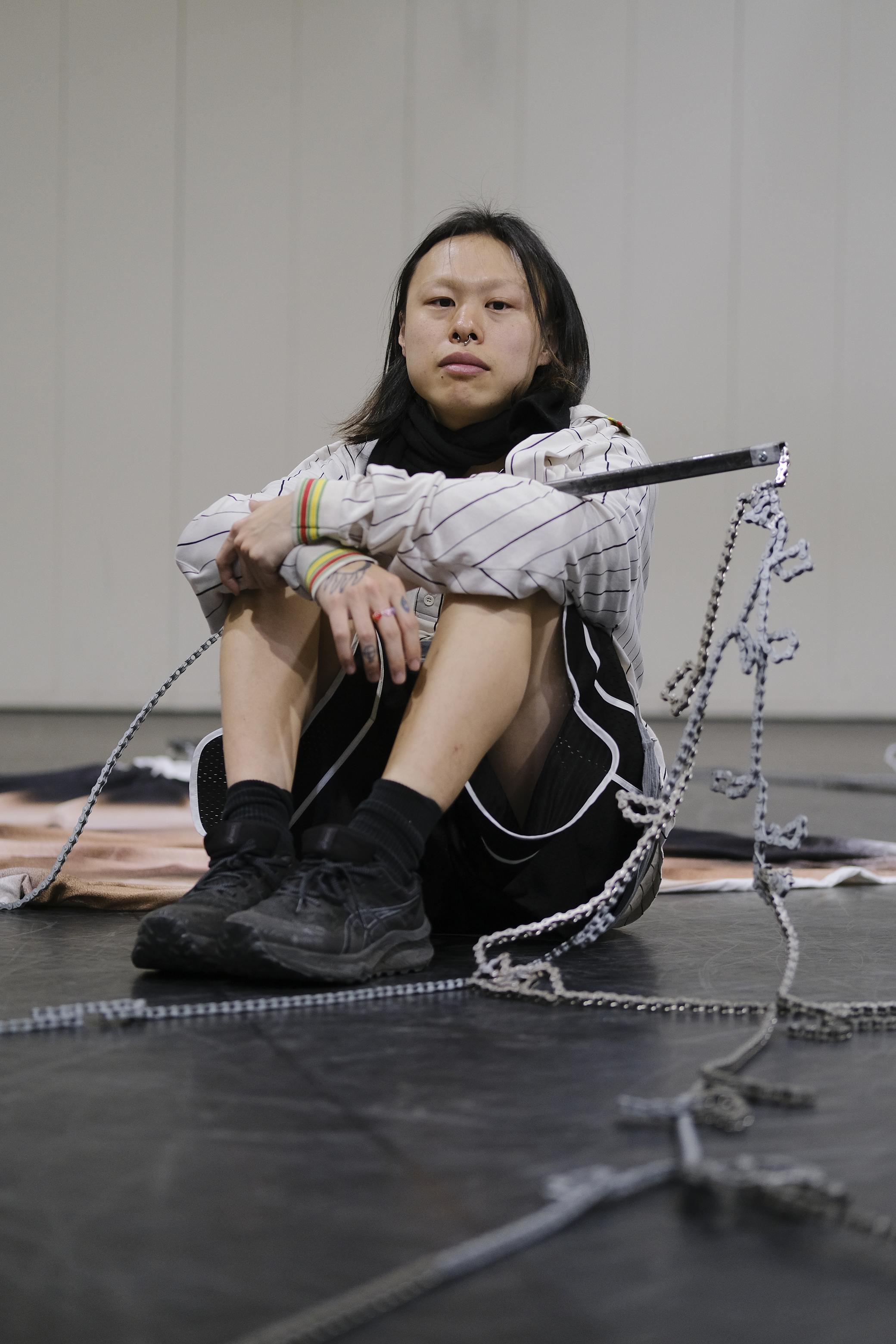
Presented at the Ballet national de Marseille in a residency showing on 20 March, High Gear marks a new chapter in Kidows Kim’s creative journey the third installment of a project that will ultimately comprise twenty works.
“This is a long-term project that explores an intimate cosmology. Together, these twenty performative acts will form a kind of dictionary of fantastical creatures, existing somewhere between fiction and reality.”
The title High Gear evokes speed: the speed of the yonkoma, a four-panel manga format that has long been popular in the Korean press, particularly in political cartoons. But it also evokes the dizzying pace of contemporary society, caught in a relentless pursuit of efficiency, immediacy, speed, and compulsive consumption.

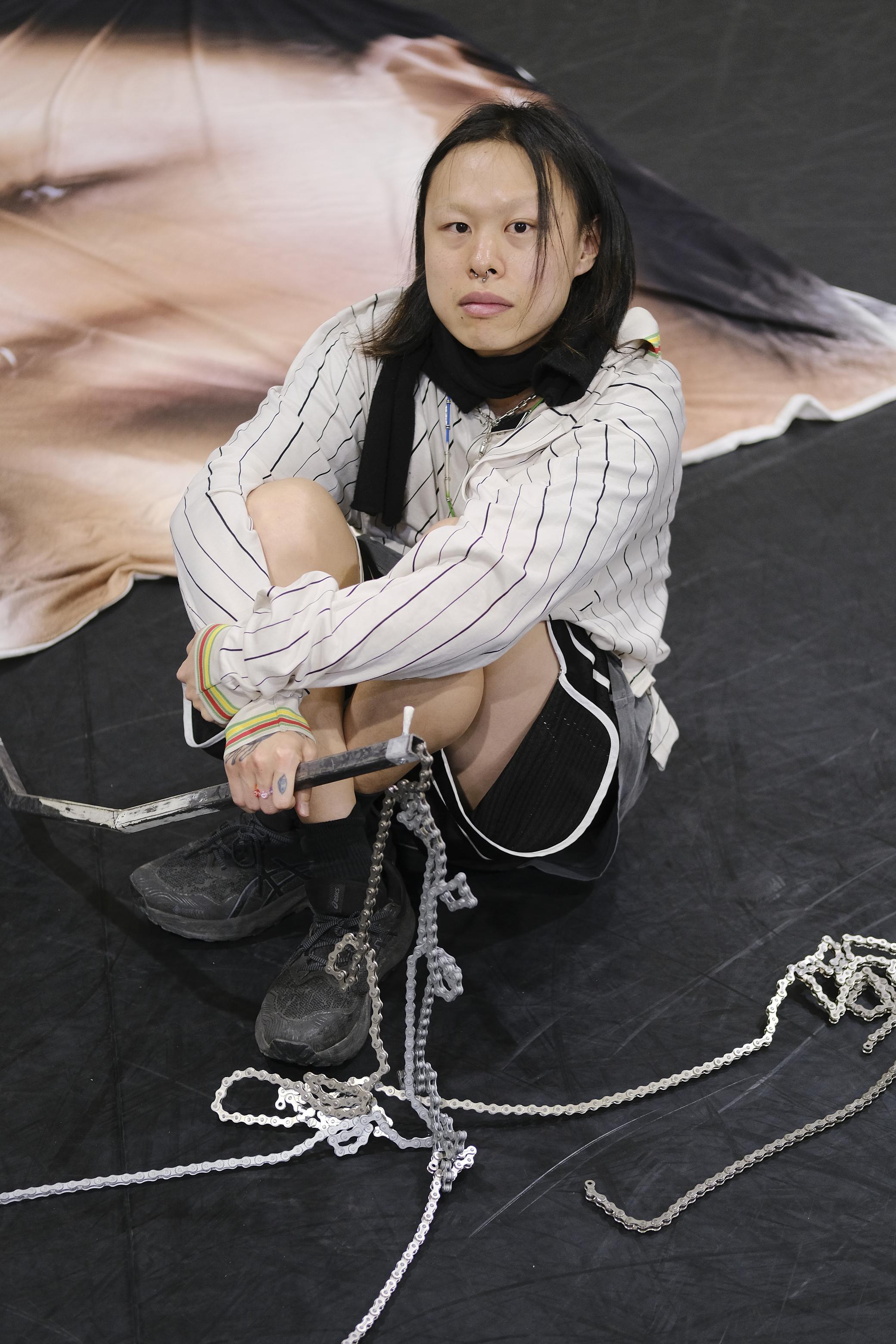
Alone on stage, Kidows Kim uses the body to evoke the cyclical and repetitive nature of contemporary processes of production, consumption, recycling, and reincarnation, driven to the point of vertigo. In doing so, the work also suggests a possible attempt to break free from them.
The piece serves as a metaphor for an endless cycle, both personal and collective. Like the yonkoma, it unfolds in four frames that also function as intimate vignettes: Birth, Eat, Work, and finally Death… for in Korean, the word for the number four is a homophone of the word for death.
Each scene draws upon a lived memory, a particular gesture, and its translation into performance. At the same time, each one inscribes intimate memory within a collective dramaturgy of becoming.
“I wanted to touch upon this universal structure as a human being, while starting from my own personal experience. I know what it is to be born, to eat, to work… Death, for the moment, is the only experience I have yet to live.”

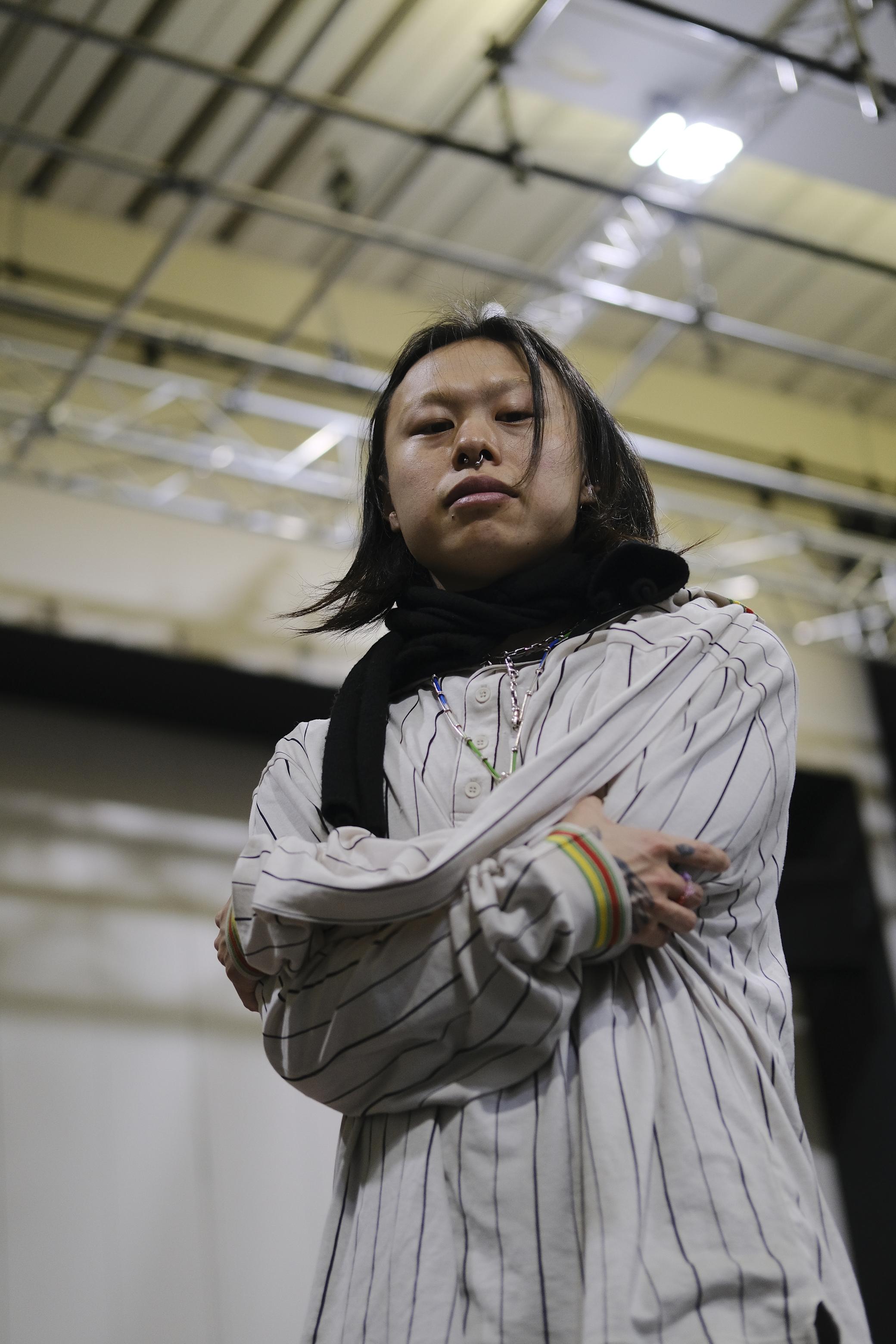
Fascinated by the heightened physicality of the alternative manga he collects their onomatopoeia, cries, chewing sounds, and distorted faces Kidows Kim sought to root his choreographic language in a dramaturgy inspired by the illustrated page, reaching beyond the simple juxtaposition of images.
“The temporality of manga images is quite fluid. What interested me, however, was working with what exists precisely between those images. It’s about activating a kind of ghostly memory a mnemonic presence that I become the catalyst for.”
Carried by a soundtrack inspired by the 1970s and 1980s, the scenography creates an interstitial space that is at once an intimate landscape and an otherworldly sculpture. It brings together bicycle chains that resemble tentacles, costumes, a hanging mobile, doll heads, and other evocative objects.
“It is a sculpture that is both personal and collective, in which every element is interconnected.”