- Pièce chorégraphique
- Publication
- 12.07.2026
(La)Horde, in Good Company
Marine Brutti, Jonathan Debrouwer and Arthur Harel make up the collective at the helm of the Ballet National de Marseille. From Madonna and Angèle to Rosalía, pop stars can’t get enough of them.
By Philippe Noisette for Les Echos
Marine Brutti, Jonathan Debrouwer and Arthur Harel do everything as a trio, from creating works to giving interviews. More often than not, they prefer to present themselves as the collective (La)Horde rather than sign each production with their individual names. At the helm of the Ballet National de Marseille since 2019, they have become the darlings of the pop world. Madonna, Angèle, Rosalía, the list of their collaborations is dizzying. Music videos, live shows, short films, fashion: (La)Horde is everywhere.


With their atypical backgrounds, Marine Brutti and Jonathan Debrouwer studied decorative arts, while Arthur Harel studied dance, they stand apart in the choreographic world. They describe themselves as “impossible to categorize. We remain free.” They founded the collective (La)Horde in 2013. “Children” of social media, enriched by encounters with communities of dancers who emerged in the post-internet era, they are determined not to confine themselves to a single style.
They admire the Italian director Romeo Castellucci and his highly visual theatre, as well as the physical dance of Belgian choreographer Wim Vandekeybus. Their culture blends cinema, video games and social issues.
Meeting the day after the premiere of Après moi, le déluge at the Montpellier Danse festival, the three friends seem almost relaxed, betraying none of the pressure on their shoulders. A world tour is already taking shape for what has become one of the major events of the moment, at a time when dance is going through a genuine crisis in France. Tickets for their new work sold out within a week.
“We make an art that is not constrained by a goal of profitability, but one that has a civic purpose. We are always thinking about the audience, about performing for them. Addressing others is neither naïve nor pretentious. What matters is remaining demanding.”
Their latest productions, with their imposing stage designs, are reaching new audiences, not only contemporary dance enthusiasts, but also fans of electronic music and visitors to contemporary art biennials. A breath of fresh air in theatres.

At the Helm of the Ballet de Marseille
In June 2019, news that Marine Brutti, Jonathan Debrouwer and Arthur Harel had been appointed to lead the Ballet National de Marseille delighted some, surprised others and irritated a few. Still in their thirties, they suddenly found themselves running what had become one of France’s most prestigious national choreographic centres, with a budget of more than €4 million. Originally created for choreographer Roland Petit, the retro-futuristic building on the edge of Parc Borély boasts beautiful rehearsal studios.
Following Petit’s departure, the institution went through a succession of somewhat chaotic leaderships. (La)Horde turned it into a project for the 21st century, “placing youth, digital issues, and new and radical experiences at its heart,” to quote the French Ministry of Culture’s announcement. Above all, the collective arrived with an international network and numerous performance dates already lined up.
In the eyes of some observers, parachuting in these arty, “Parisian” creators was an affront to Roland Petit. But that overlooks the fact that the choreographer of Carmen, husband of Zizi Jeanmaire, worked in Hollywood and created projects with Pink Floyd and Jean Cocteau.
After a tentative start, Marine Brutti, Jonathan Debrouwer and Arthur Harel found their footing in Marseille. They even brought the great American choreographer Lucinda Childs back into the institution’s repertoire.

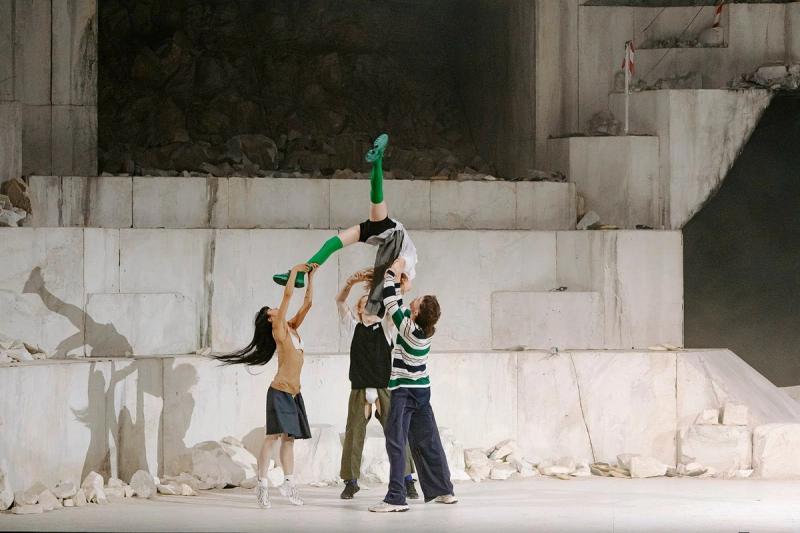
In 2021,
they presented an outdoor version of Room With a View on the terraces of the Ballet National de Marseille. This was followed by a performance on a floating stage in Marseille’s Old Port for an audience of 20,000. More importantly, they brought a new spirit to the institution.
“We organise lots of open-studio sessions in Marseille. The Ballet shares its building with the dance school, and it’s inspiring to see students come and watch our dancers at work. When we open our rehearsals, 200 people come through. There is a desire to create something every day. We see the Ballet National de Marseille as a research laboratory,” they explain.
The company is without borders and attentive to questions of diversity, in short, a choreographic “safe space.”
For each audition, the collective is highly selective. There is no question of bringing in 1,000 people. “An audition is first and foremost a moment of encounter. It should definitely not be an exam.” Nevertheless, the BNM has become one of the most desirable and sought-after choreographic institutions.
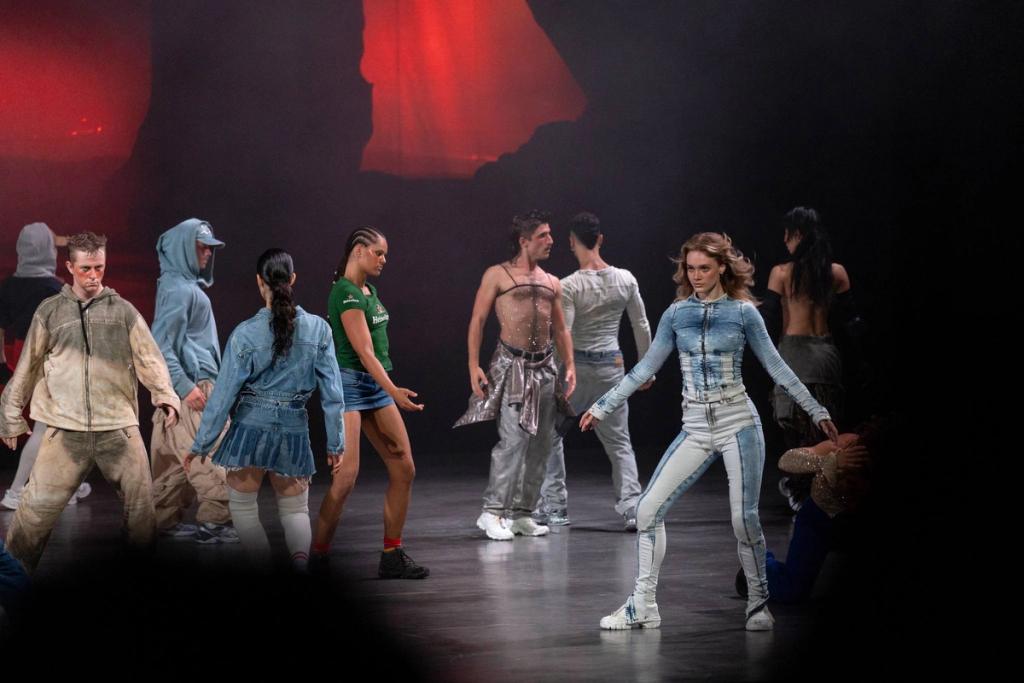
“We move forward together,” say the artist-directors. They embrace contemporary mythologies and have invited science-fiction writer Alain Damasio to work alongside them. But there is always a strong sense of spectacle. There is plenty of dancing in their creations and some thinking, too.

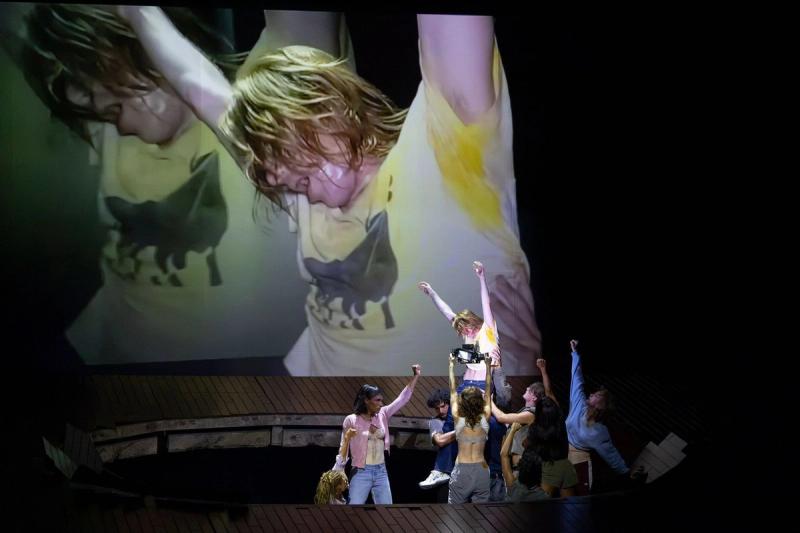
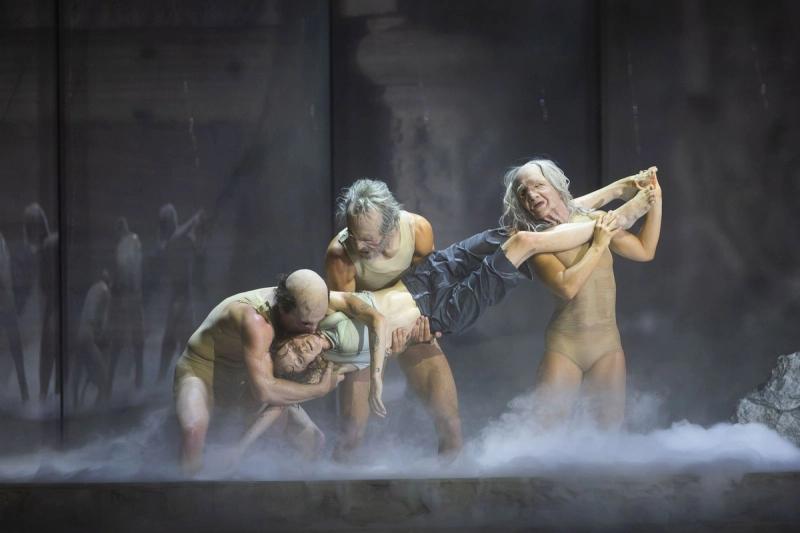
With Après moi, le déluge, they explore biohacking the idea of “hacking” one’s own body in an attempt to achieve eternal youth. “There is no intention to reproduce reality; we play with symbols,” the trio explains. On stage, three dancers made up to look like elderly people, gathered around a swimming pool, seem to be searching for an improbable form of eternity the very same obsession associated with figures such as Elon Musk or Vladimir Putin. A strikingly topical subject.

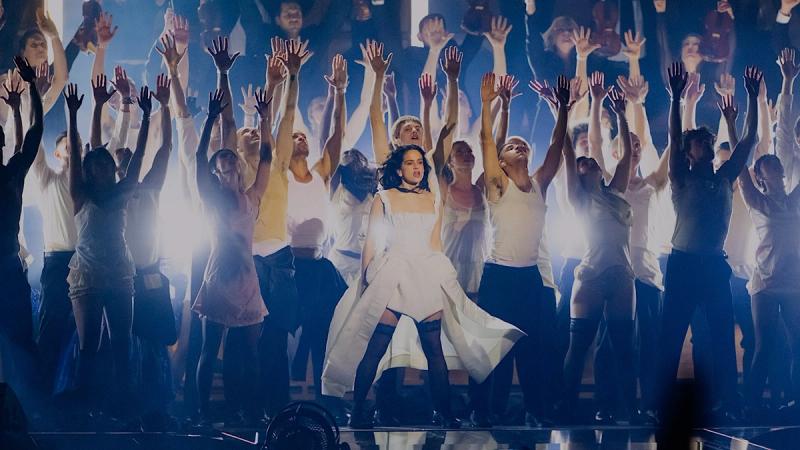
On February 28, 2026, at the Brit Awards—the major celebration of British music, considerably less formulaic than the American Grammy Awards they pulled off a major coup. Catalan star Rosalía performed her hit Berghain, from the widely acclaimed album Lux. In this live version, violins gave way to techno rhythms.
Icelandic artist Björk joined the performance or, more accurately, the party as dozens of dancers transformed the stage into a rave. Behind this electrifying tableau, which quickly spread across social media, were the French collective (La)Horde.
A month later, Rosalía launched her international tour in Lyon. The show was immediately acclaimed for its originality and perfectionism a genuine tribute to dance, as envisioned by the singer.